

Our commitment to evidence-based innovation
Founded by healthcare professionals ourselves, Grasp is built on one principle: innovation must be evidence-based. Our solutions combine clinical insight with validated research, tested and refined through high-quality studies.
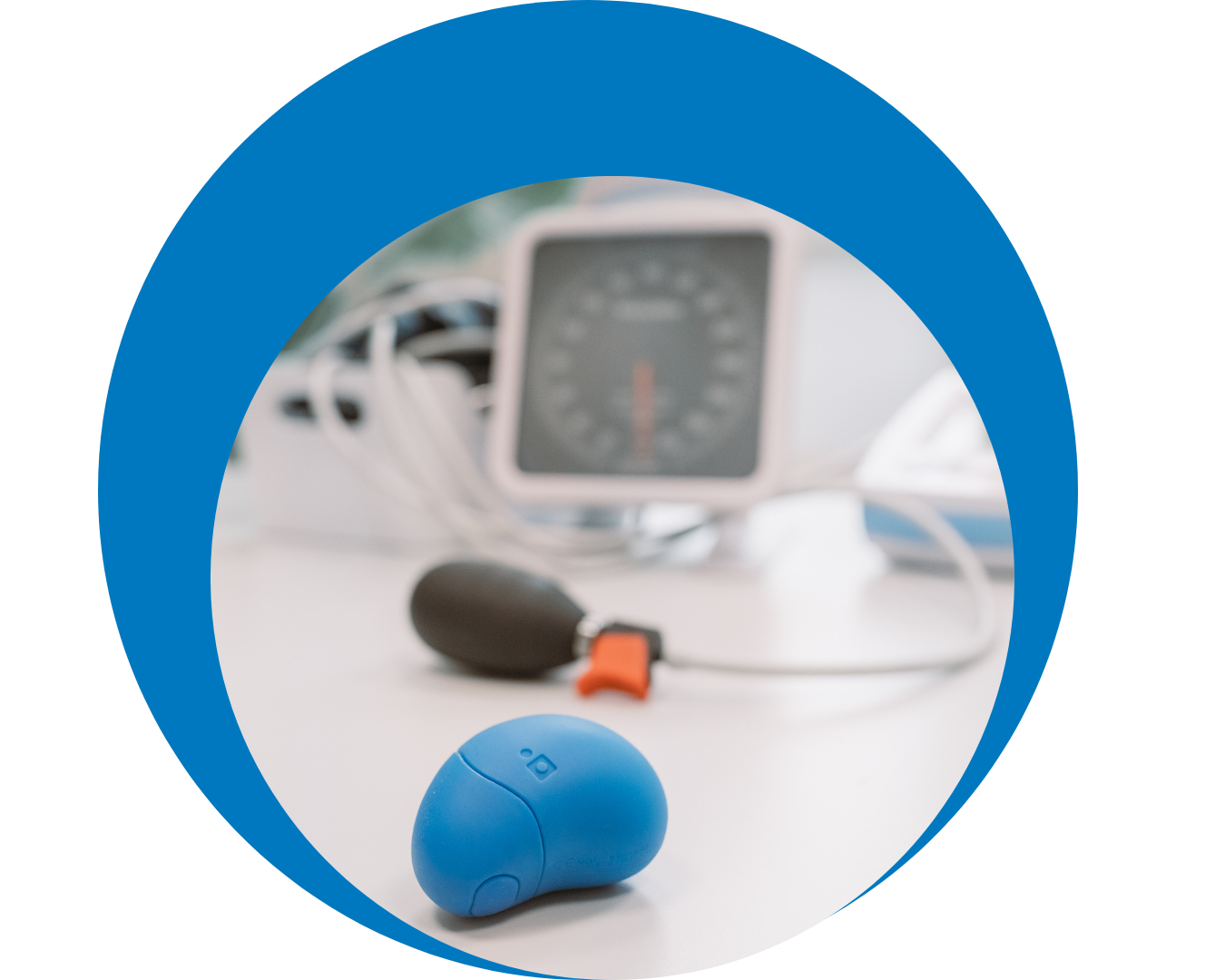
Recognized for clinical impact
Backed by more than 35 million NOK in funding from the Norwegian Research Council, we conduct rigorous clinical trials and drive innovation in close collaboration with Haukeland University Hospital and the University of Bergen. These partnerships are central to the continued development and scientific validation of our solutions.
Grasp was awarded the 2025 Innovation Prize by the Norwegian Pain Society for advancing patient-centered approaches to pain management.
Our research extends beyond pain, addressing coping, communication, behavioral science, and the future of patient experience—building a stronger foundation for evidence-based, coping-centered healthcare.




Our evidence-based foundation
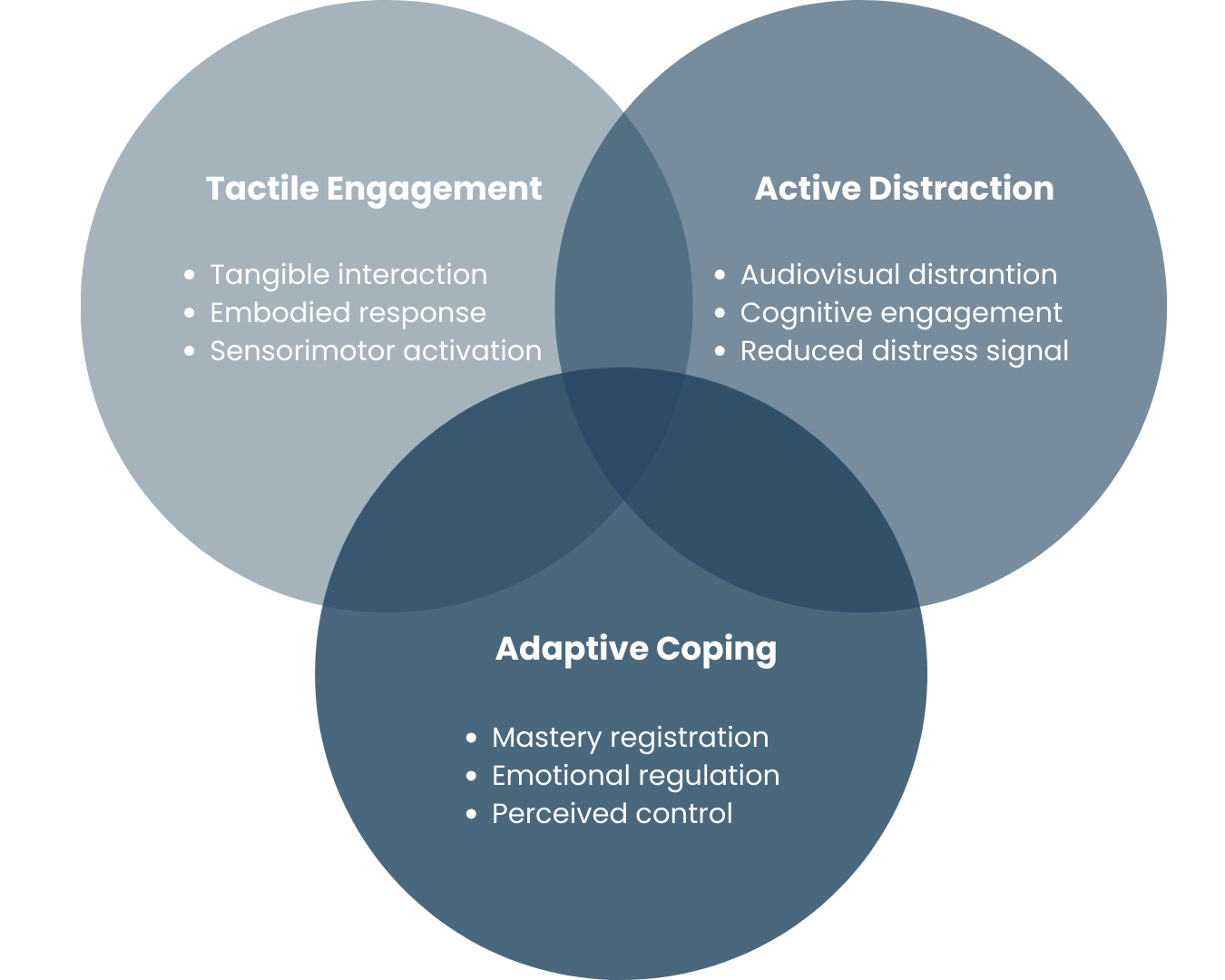
Grasp builds on established evidence in pediatric pain management and behavioral science. International guidelines and systematic reviews, including Cochrane reviews, show that active distraction, sensory engagement, and supportive interaction can significantly reduce distress and improve coping during medical procedures.
These mechanisms form part of the evidence-based approach to non-pharmacological pain and stress management in children and adolescents.
Related Cochrane reviews
-
Systematic reviews, including Cochrane reviews on psychological interventions for needle-related and procedural pain in children, show that active distraction techniques significantly reduce pain intensity and distress.
Examples include:
Interactive activities
Audiovisual engagement
Games, music, or storytelling
Parent-guided distraction
These approaches work by shifting attention away from the procedure and reducing the cognitive processing of pain.
Evidence level in clinical guidelines: Level A
Data on file.
-
Clinical guidelines also highlight the role of sensory stimulation and physical interaction in supporting comfort and emotional regulation during procedures.
Examples include:
Physical touch
Massage
Comfort positioning
Holding objects
These tactile inputs can help regulate stress responses and provide grounding during challenging experiences.
Evidence level in clinical guidelines: Level B
Tactile engagement creates a physical anchor for attention and reflection, reinforcing mastery experiences and perceived control.
Data on file.
-
Evidence-based pediatric care emphasizes that coping strategies should be adapted to the child’s developmental stage.
Recommended approaches include:
Guided imagery
Play-based preparation
Interactive distraction
Supportive communication
These techniques support children’s sense of control and coping ability, which are important factors in reducing procedural distress.
Evidence level: Level B–A depending on intervention
Grasp integrates tactile interaction with structured reflective feedback to support these evidence-informed mechanisms.
Data on file.

Artificial intelligence that reflects the whole patient
Artificial intelligence in healthcare has traditionally relied on objective data. Imaging, measurements, and workflows have enabled remarkable precision and efficiency.
Yet outcomes are not shaped by measurements alone. Stress, uncertainty, trust, and perceived control influence how patients experience care and how recovery unfolds.
Grasp captures these subjective patient signals in real time. When combined with objective clinical data and AI-driven analysis, these signals add critical context and strengthen decision support.
-
AI has excelled at analyzing objective inputs. But objective data explains what is happening medically, not how it is experienced by the patient.
Context emerges when clinical measurements are combined with real-time patient signals. Together, they provide a more complete understanding of the situation, enabling AI to support decisions that balance medical precision with human experience.
In postoperative care, for example, Grasp can contribute symptom and pain signals to recovery platforms such as RecovryAI, helping clinicians understand how patients are coping during recovery.
-
Patient-reported signals are often treated as secondary to clinical metrics. In reality, they provide critical insight into stress response, readiness, risk tolerance, and ability to cope during treatment.
When subjective experience is integrated alongside objective data, AI moves from protocol-driven recommendations toward truly personalized, situation-aware guidance.
-
The next generation of AI is not about producing more dashboards or alerts. It is about supporting better clinical judgment in complex, human-centered environments.
By interpreting both medical parameters and patient experience in real time, AI can generate recommendations that are meaningful and actionable at the point of care.
-
Efficiency matters. But sustainable healthcare also depends on safety, trust, adherence, and long-term engagement.
When AI incorporates both clinical and experiential dimensions, it supports care that is not only technically correct, but aligned with patient comfort, stability, and long-term outcomes.
Regulatory Compliance
-
-
Grasp Aware has received FDA registration as a Powered Communication System (21 CFR 890.3710, Class II, Product Code ILQ, 510(k) exempt). Please contact us for further information.
-
Our organization maintains a Quality Management System (QMS) that has been established and is certified to comply with the requirements of ISO 13485 for medical device quality management systems. The QMS is regularly audited to ensure ongoing conformity and effectiveness. Please contact us for further information.
Intellectual Property Rights
-
Our company holds 17 registered patents worldwide, reflecting our commitment to innovation and technological advancement.
Please contact us for further information regarding our patent portfolio. -
Our trademark is registered in the European Union, ensuring legal protection of our brand across EU member states. Please contact us for further information regarding our trademark registration.
Our certifications
Our certifications




Whatever challenge your patients face, we are here to help them cope with confidence.
-
Grasp was founded by two clinicians who, over years of practice, repeatedly saw the same challenge: patient fear was recognized, but rarely managed in a way that strengthened confidence and lasting trust.
-
By combining clinical insight with proven coping strategies, Grasp gives patients a simple way to express and manage their emotions in real time. Helping them feel safer, more in control, and better supported during care.
-
We collaborate with dental clinics, primary care providers, emergency departments, and hospitals committed to delivering calmer, more confident care.
Research & Publications
-
Use of a Handheld Communication Tool for Children and Youth During Dental Procedures: A Two-Site Controlled Intervention Study
Acta Odontologica Scandinavica, 2026
Poster presentation:
NOSF Conference 2025 – 🏆 Awarded Best Poster 2025
This clinical study evaluated Grasp as a communication tool during dental procedures in children and youths aged 6–25 years across two dental clinics in Norway. The findings showed that patients using Grasp reported greater confidence that their dentist understood their feelings, recognized when they wanted to stop, and made it easier to communicate discomfort during treatment. The effect was strongest among participants with lower baseline confidence in communication.
-
Ørskov Rotevatn et al., Journal of Pediatric Rehabilitation Medicine, 2026
We are proud to announce the publication of a new peer-reviewed study evaluating the use of Grasp in pediatric rehabilitation.
This multi-method feasibility study explored how children and adolescents (8–16 years) used Grasp to register experiences of coping and mastery during a structured rehabilitation program. The study included 23 participants and demonstrated:
100% recruitment rate
96% retention
High adherence and usability
Strong acceptability among both children and healthcare professionals
Participants reported that using Grasp helped them reflect on positive achievements, strengthened their sense of mastery, and in some cases encouraged them to take on new challenges. Healthcare professionals highlighted the system’s value as a conversation facilitator and insight tool.
The findings suggest that tangible interaction through Grasp may support self-efficacy and positive mindset development in children and adolescents undergoing rehabilitation.
-
Measuring Pain Intensity Through Physical Interaction in an Experimental Model of Cold-Induced Pain: A Method Comparison Study
Scandinavian Journal of Pain, June 2024
PMID: 38881392Poster presentations:
NOSF Conference, Oslo (June 2023)
EFIC Congress, Budapest (September 2023)
Master thesis (MD): Ulrikke Hugaas, 2023
This experimental study examined whether pain intensity could be reported through physical interaction using Grasp, a handheld electronic device, compared with the verbal Numeric Rating Scale (NRS) in a standardized cold-induced pain model. The study found that Grasp was intuitive and easy to use, but that the association with NRS and repeatability across repeated tests were not strong enough for clinical use in its initial form.
-
Measuring Pain Intensity in Categories Through a Novel Electronic Device During Experimental Cold-Induced Pain
Scandinavian Journal of Pain, September 2025
Poster presentation:
IASP World Congress on Pain, Amsterdam (August 2024)
This experimental follow-up study tested an updated version of Grasp with instant visual feedback using colour-coded pain categories. The results suggested that while Grasp did not perform as a strong continuous pain scale, it may have value as a categorical pain assessment tool, especially in settings where verbal reporting is difficult or impractical.
-
Using a Tangible Device and Mobile Application for Symptom Assessment and Recovery Monitoring After Knee Arthroplasty Rehabilitation: A Mixed-Method Feasibility Study
Published in BMC Digital Health, 2026 https://doi.org/10.1186/s44247-026-00264-xMaster thesis: Emilie Stensaker, May 2025
Poster presentations:
EFIC Congress, Lyon (April 2025)
NOSF Conference, Oslo (June 2025)
-
Enhancing Postoperative Recovery: Patient Experience with a Digital Tool for Pain Monitoring and Rehabilitation Following Knee Replacement
Conference abstract (II-C.14) -
Grasping patients’ perspectives: a multi-method innovation-development study of a novel digital device for capturing patients’ pain, discomfort, and coping
https://nva.sikt.no/registration/019e2b28d2a2-6692c26b-6c84-439f-8e4c-57b96d40f0c4
PhD thesis: Elisabeth Ørskov Rotevatn, 2026
University of Bergen, Faculty of Medicine, Department of Clinical Science
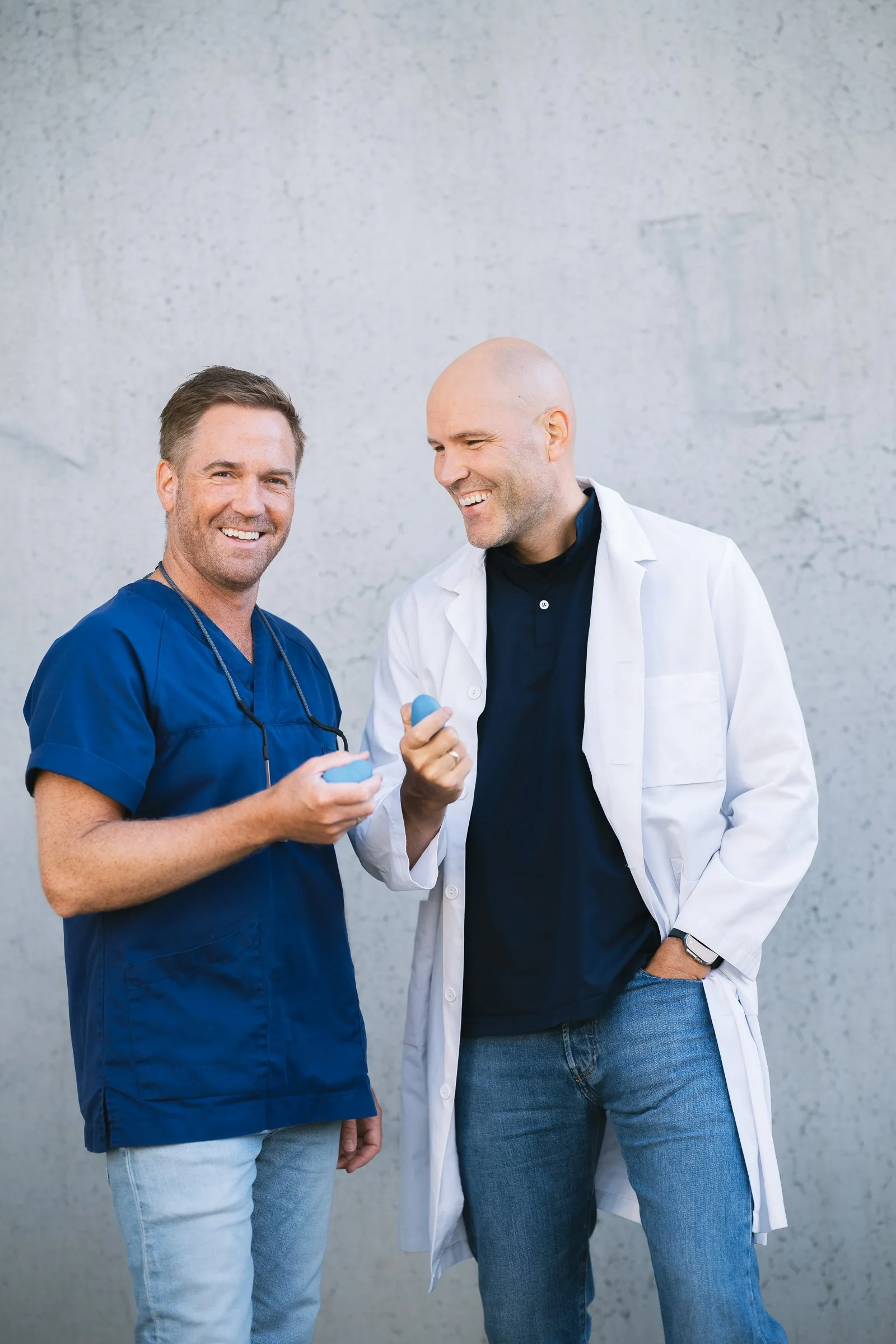
Grasp was created with one clear mission: to make healthcare truly work for patients.
Founded by two brothers - a dentist and a doctor, we believe care should go beyond treating symptoms. It should empower, connect, and transform every experience.
Through years of clinical practice, we noticed the same pattern again and again. Patient fear was acknowledged, but the underlying stress response was rarely addressed in a way that built confidence and trust.
By combining clinical insight with proven coping strategies, Grasp gives patients a simple, intuitive way to regulate their emotional response in real time.
By placing control back in patients’ hands, Grasp helps turn uncertainty into confidence and treatment into trust.
About us
Get in touch
Interested in working together? Fill out some info and we will be in touch shortly. We can’t wait to hear from you!